 Australia U23
 Korea Republic U23
Form Analysis and Market Value
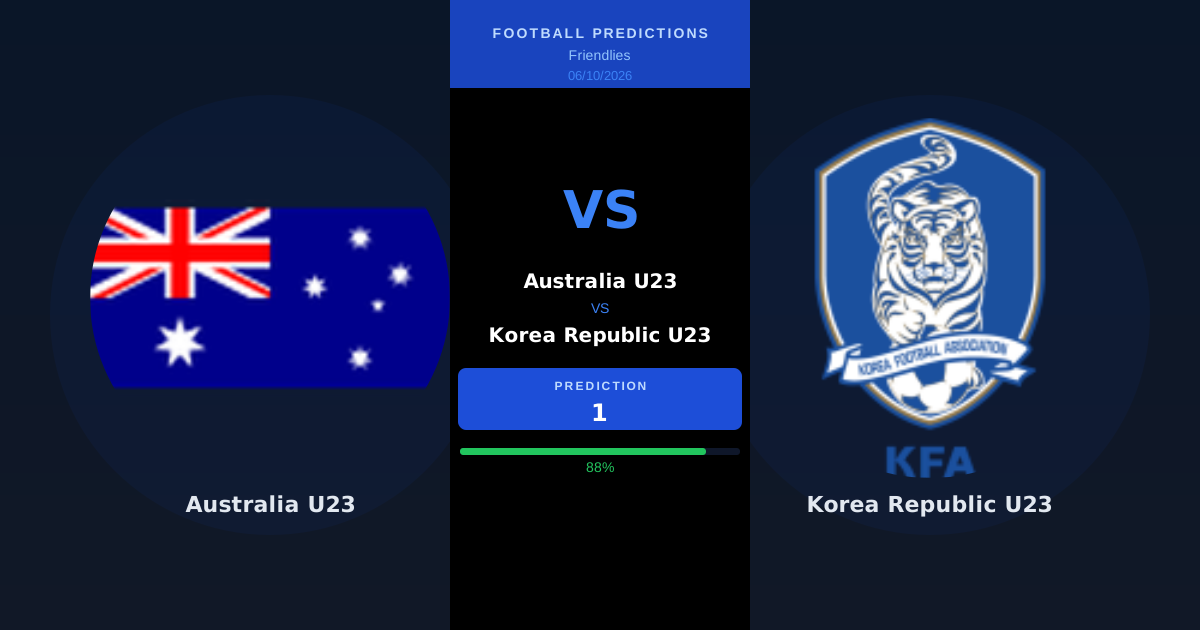
Australia U23 comes into this match after a lengthy break, having not played in 261 days, which could either mean they are well-rested or rusty. Their form over the last 20 matches shows a balanced record with 10 wins, 5 draws, and 5 losses. Importantly, on home turf, Australia U23 has been strong with 5 wins, 4 draws, and 3 losses, scoring an average of 2.25 goals per match while conceding 1 goal on average. This home form, however, also includes a recent 1-2 loss to Korea Republic U23, showcasing that while they are strong at home, Korea has found success against them. Korea Republic U23, on the other hand, arrives on an upward trajectory, riding a winning streak in their last four matches, including commanding victories over Vietnam and China PR. Their away form is more volatile, with an even split of 5 wins and 5 losses, scoring 2.2 goals per match but conceding 1.7. This inconsistency on the road can be a double-edged sword, making them unpredictable. Given these dynamics, the market might overestimate Korea's recent win streak against their underlying away vulnerability, providing potential value in betting against them.
Market Analysis and Betting Opportunities
In the 1X2 market, Australia U23 is priced at odds of 1.85 for a win, translating to an implied probability of 54%. The model supports this with an exact 54% chance, aligning closely with the market but offering a slight edge when factoring in Korea's recent schedule. On the flip side, Korea Republic U23 is at odds of 3.70, reflecting a 27% implied probability. The model matches this, suggesting no significant market value. The draw is priced at odds of 4.20, implying a 19% chance, which again aligns with the model's view. Moving to the Over/Under 2.5 goals market, the model indicates a 65% probability for over 2.5 goals, with the odds possibly offering value if priced higher than 1.54. Both teams have hit the over in 50-60% of their past matches, supporting this model projection. BTTS is another intriguing market; with a model probability of 60% and both teams' history of scoring and conceding, any odds better than 1.67 could offer value. Finally, the Double Chance or Draw No Bet markets are worth considering if the odds for Australia U23 offer less return than desired. These markets provide insurance against Korea’s potential resilience, albeit at a reduced return.
Risk Assessment and Betting Discipline
The primary risk in backing Australia U23 stems from their extended inactivity, posing questions about match fitness and sharpness. While their rest could translate into fresher legs, it might also result in a sluggish start against a Korea team that has been battle-hardened with recent competitive fixtures. The market’s odds on Korea reflect their current winning streak but might overestimate their stamina given the tight schedule. If Korea can capitalize on potential Australian rustiness early, they could disrupt the model’s predictions. Another scenario where the bet might falter is if Korea’s away volatility swings in their favor; their ability to score 2.2 goals on average away from home introduces unpredictability. Bettors should be disciplined and monitor odds closely; if Australia’s odds drift beyond 2.00, the value proposition diminishes. At such a point, recalibrating the stake or considering alternative markets would be wise to maintain bankroll health.
Final Bet Recommendation and Considerations
For this matchup, the standout value pick is Australia U23 to secure a victory at odds of 1.85, with a value edge of 1.95 percentage points. This selection is supported by Australia's solid home form and the considerable rest advantage over Korea Republic U23, who have faced a congested schedule with three matches in the past 14 days. While Australia’s prolonged break poses some risk of rustiness, their home advantage and prior performance against Korea make them a sensible choice. For the more risk-averse, the Over 2.5 goals market provides an alternative, given both teams’ scoring tendencies and the model's 65% probability, though no specific odds were provided. The main risk lies in Australia’s potential lack of match sharpness due to their long layoff, which could offset their rest advantage. If odds shift significantly pre-match, it would be prudent to reassess, especially if Australia’s odds move beyond 2.00, thus diminishing the value.